

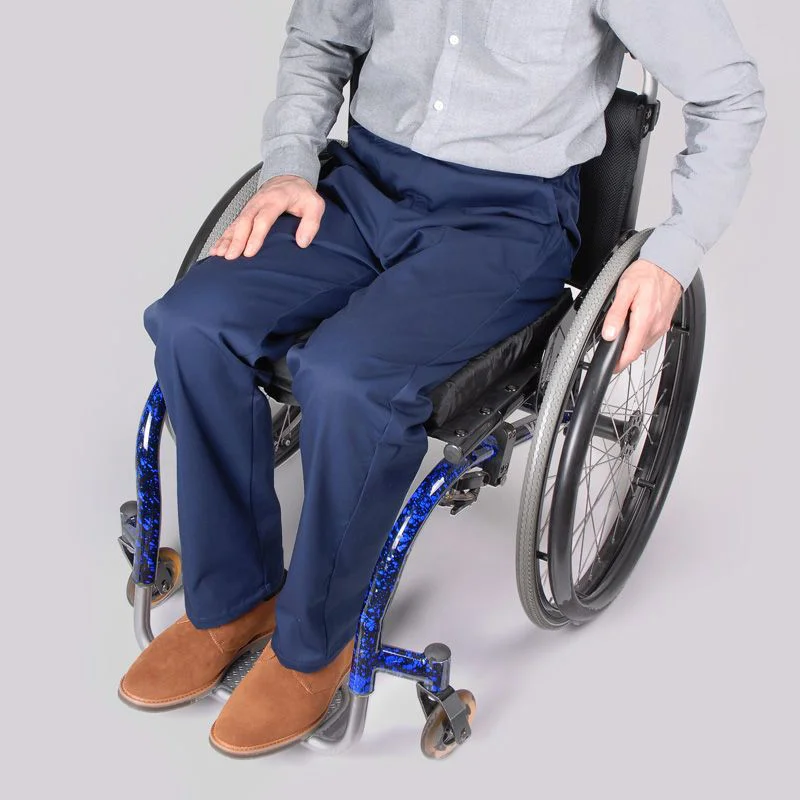
For most people, getting dressed is something they rarely think about.
But for many wheelchair users, clothing can be a daily source of discomfort, frustration and inconvenience.
The reality is that most clothing sold on the high street is designed for people who spend the majority of their day standing, walking and moving freely. As a result, standard trousers, jeans, shorts and even some tops often fail to meet the practical needs of wheelchair users.
At Able2 Wear, we regularly speak to customers who tell us the same thing: clothing that once felt comfortable becomes uncomfortable, restrictive or difficult to manage after they begin using a wheelchair.
In this article, we’ll explore why ordinary clothing often doesn’t work for wheelchair users, the common challenges people face, and how adaptive clothing can help improve comfort, dignity and independence.
The Problem with Clothing Designed for Standing
Most mainstream clothing is designed around a standing body shape.
When you’re seated for several hours a day, the way clothing fits and behaves changes dramatically.
Trousers that fit perfectly when standing may:
- Dig into the waist when sitting
- Slip down at the back
- Create uncomfortable pressure points
- Bunch around the hips and knees
- Become difficult to adjust independently
What seems like a small annoyance can become a significant source of discomfort when experienced every day.
Common Clothing Problems Wheelchair Users Experience
Trousers Slipping Down at the Back
One of the most common complaints we hear is that ordinary trousers often ride down when seated.
This can leave the lower back exposed, create discomfort and affect confidence when out in public.
Wheelchair users often find themselves repeatedly adjusting their clothing throughout the day.
Waistbands Digging Into the Stomach
Traditional waistbands are designed to sit comfortably when standing.
However, when sitting for long periods, the waistband can press into the abdomen, creating discomfort and irritation.
This is particularly common with jeans and formal trousers.
Fabric Bunching Around the Hips and Legs
Excess material may gather behind the knees, around the hips or under the thighs.
Over time, this can create discomfort and make sitting less comfortable.
Difficult Fastenings
Many wheelchair users also live with conditions that affect hand strength, dexterity or coordination.
Buttons, zips and hooks that once seemed straightforward can become difficult to manage.
This may affect people living with:
- Multiple Sclerosis
- Parkinson’s Disease
- Stroke-related disabilities
- Arthritis
- Cerebral Palsy
- Spinal Cord Injuries
Pressure Points and Skin Discomfort
Long periods of sitting can increase sensitivity to seams, fastenings and bulky fabric.
While clothing alone does not cause pressure sores, poorly designed garments may contribute to discomfort by creating unnecessary pressure points.
Why Comfort Matters More Than Many People Realise
Comfort isn’t simply about convenience.
When clothing is uncomfortable, it can affect:
- Confidence
- Independence
- Social activities
- Daily routines
- Overall quality of life
Many wheelchair users find themselves avoiding certain garments altogether because they no longer meet their needs.
How Adaptive Clothing Solves These Problems
Adaptive clothing is designed specifically to address the challenges that standard clothing often creates.
Higher Back, Lower Front Design
Many wheelchair trousers feature a higher back rise and lower front.
This helps maintain coverage while seated and prevents the waistband from slipping down.
Flat Seams
Flat seams help reduce friction and improve comfort during prolonged periods of sitting.
Easier Fastenings
Features such as:
- Velcro fastenings
- Side zips
- Drop-front openings
- Easy-grip closures
can make dressing easier and support greater independence.
Seated Comfort Design
Adaptive clothing is cut specifically for a seated position, helping reduce bunching and improve overall comfort.
Who Benefits from Adaptive Clothing?
Adaptive clothing may be beneficial for:
- Full-time wheelchair users
- Part-time wheelchair users
- Mobility scooter users
- People recovering from a stroke
- Individuals with neurological conditions
- Older adults with reduced mobility
- Family carers assisting with dressing
Many people discover adaptive clothing only after struggling with standard garments for months or even years.
Support and Advice for Wheelchair Users
If you’re adapting to life in a wheelchair or supporting someone who is, there are a number of organisations that can provide practical advice and support.
- Scope – Information and support for disabled people and their families.
- Disability Rights UK – Guidance on independent living, benefits and accessibility.
- Motability – Support with mobility and accessible transport solutions.
- MS Society UK – Information and resources for people living with Multiple Sclerosis.
- Parkinson’s UK – Practical support for people affected by Parkinson’s.
- Spinal Injuries Association – Advice and support following spinal cord injury.
Frequently Asked Questions
Why are regular fit clothes uncomfortable in a wheelchair?
Most clothing is designed for standing and walking. When seated for long periods, waistbands, seams and fabric placement may become uncomfortable or impractical.
What makes adaptive clothing different?
Adaptive clothing is specifically designed for people with mobility challenges. It often includes features such as higher backs, easier fastenings, flat seams and designs optimised for seated comfort.
What trousers are best for wheelchair users?
Many wheelchair users prefer trousers with a higher back rise, flat seams and easy-access fastenings. The best option depends on individual mobility needs and personal preferences.
Can adaptive clothing help with dressing independently?
Yes. Many adaptive garments are designed to be easier to put on and remove, particularly for people with reduced dexterity or one-handed use.
Are wheelchair users more likely to experience clothing-related discomfort?
Many wheelchair users spend extended periods seated, which can make issues such as pressure points, bunching fabric and restrictive waistbands more noticeable.
Is adaptive clothing only for wheelchair users?
No. Adaptive clothing can also benefit people with arthritis, Parkinson’s Disease, Multiple Sclerosis, stroke-related disabilities and other conditions that affect mobility or dexterity.
Are adaptive clothes available in modern styles?
Yes. Adaptive clothing is available in a wide range of styles including jeans, chinos, shorts, tracksuit bottoms and smart-casual clothing.
Can adaptive clothing help carers?
Many carers find adaptive clothing easier to manage during dressing and personal care routines, helping reduce physical strain and save time.
Is adaptive clothing available in the UK?
Yes. A growing range of adaptive clothing is available in the UK, designed specifically for wheelchair users and people living with mobility challenges.
The Right Clothing Can Make a Real Difference
Many wheelchair users assume discomfort is simply something they must put up with.
In reality, clothing designed specifically for seated comfort can often make a significant difference to daily life.
At Able2 Wear, we understand that clothing should support independence, dignity and comfort. By understanding why ordinary clothing often doesn’t work for wheelchair users, it’s easier to recognise the benefits that adaptive clothing can provide and make more informed choices about what to wear every day.